
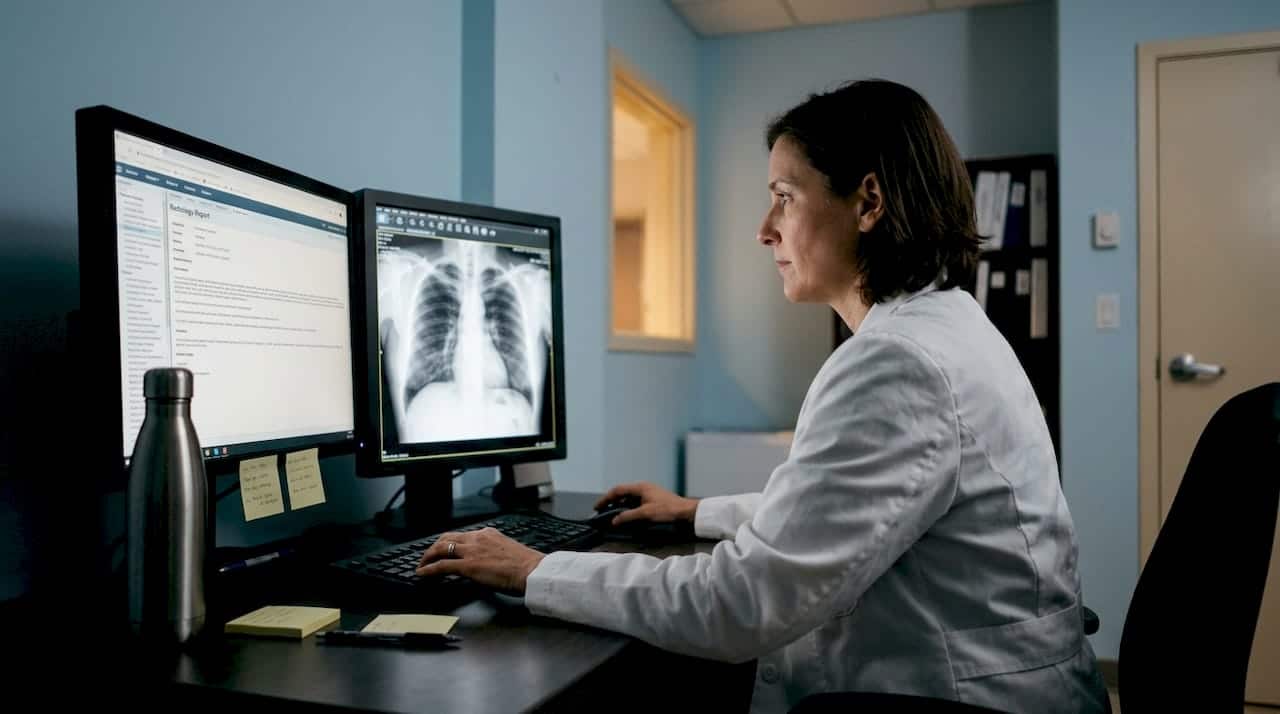
When you are referred for an X-ray, ultrasound, or mammogram, most of your face-to-face experience is with imaging technologists. Yet behind every scan result is a physician you may never meet: the radiologist. Many patients leave their appointments unsure who actually analysed their images, what a radiologist does differently from a technologist, and why that distinction matters for their health. This article answers those questions clearly, so you can feel more confident and informed every time you go for diagnostic imaging in Southern Ontario.
Table of Contents
- What does a radiologist do?
- Types of radiologists and key imaging methods
- How radiologists fit into your healthcare journey
- The impact of AI in radiology
- Why patients rarely meet their radiologists — and why their work matters
- Connect with expert imaging services in Southern Ontario
- Frequently asked questions
Key Takeaways
| Point | Details |
|---|---|
| Radiologists are physicians | Radiologists interpret medical images and guide your diagnosis and treatment plan. |
| Technologists acquire images | Imaging technologists operate the equipment, while radiologists read the results. |
| AI supports but doesn’t replace | Artificial intelligence is used in radiology workflows, but expert judgment is essential. |
| Specialties include interventional | Some radiologists use imaging not only for diagnosis but also to guide minimally invasive treatments. |
| Reports guide your care | Radiologist-generated reports help your doctor decide next steps after your imaging appointment. |
What does a radiologist do?
A radiologist is a fully licensed physician who has completed medical school, a residency programme, and often additional fellowship training focused entirely on interpreting medical images. Their job is not to operate the scanning equipment. Their job is to study the images produced by that equipment and translate what they see into a clear, medically actionable report.
Diagnostic radiology is focused on interpreting imaging to help healthcare providers see internal structures and diagnose conditions, and the doctors trained in this work are called diagnostic radiologists. That report then goes to your referring physician, who uses it to confirm a diagnosis, rule out a condition, or plan next steps in your treatment.
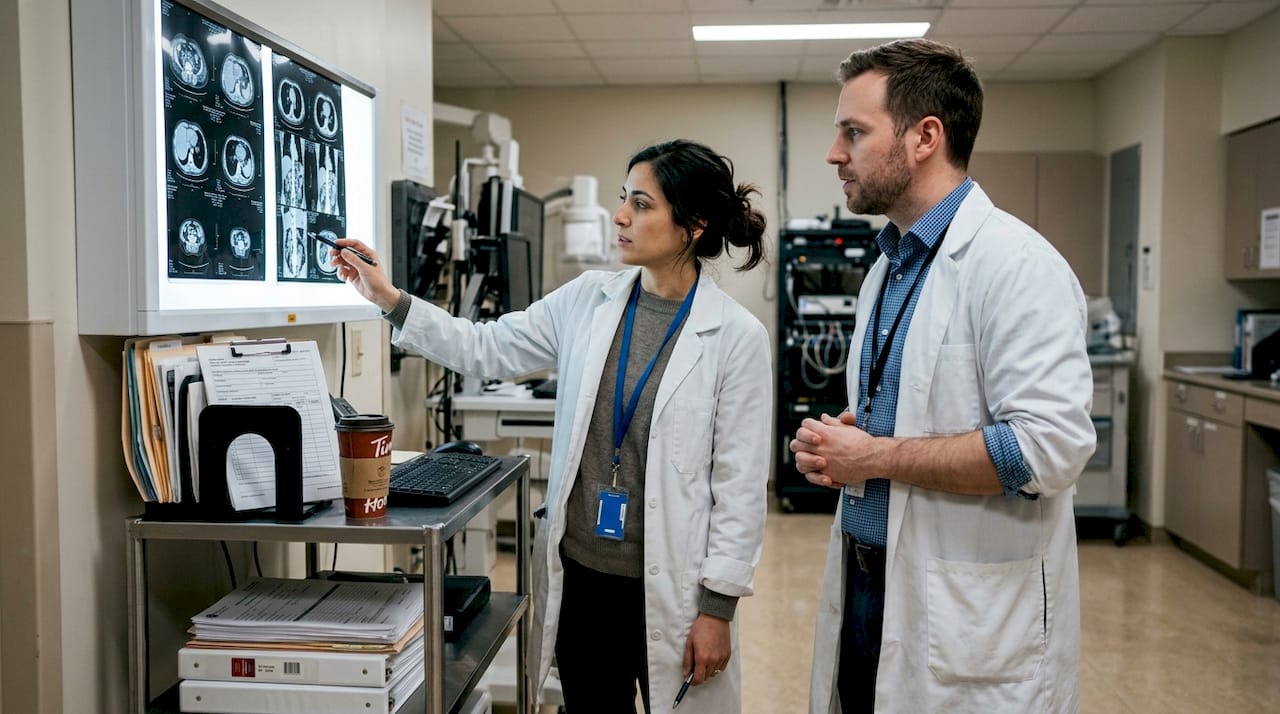
It is a common misconception that the person who performs your scan is the same person who reads it. Radiology technologists typically perform the scans and acquire images, while radiologists interpret the images and provide medical reports and clinical guidance. Both professionals are essential, but their roles are quite different.
Here is a quick look at how those roles compare:
| Role | Primary responsibility | Do they interpret your images? |
|---|---|---|
| Radiologic technologist | Operates imaging equipment and acquires scans | No |
| Radiologist (physician) | Interprets images and writes diagnostic reports | Yes |
| Referring physician | Uses the radiologist’s report to guide treatment | No |
The key tasks a radiologist performs include:
- Reviewing and interpreting medical images such as X-rays, ultrasounds, CT scans, and MRIs
- Identifying abnormal findings including fractures, tumours, infections, or organ changes
- Writing formal reports that describe their findings in detail
- Communicating with your referring physician about urgent or critical findings
- Recommending follow-up imaging if additional views are needed
If you are booking imaging appointments at a clinic like Valence Medical Imaging, understanding this division of labour helps you ask the right questions and know what to expect throughout the process.
Pro Tip: After your imaging is complete, ask your referring physician for a summary of your radiologist’s findings rather than simply waiting for a follow-up call. A copy of the formal radiology report can help you participate actively in decisions about your care.
To prepare yourself fully, it is also worth reviewing what to expect during imaging so you feel comfortable on the day of your scan.
Types of radiologists and key imaging methods
Radiology is not a single, uniform specialty. The field is divided into distinct areas, and the type of radiologist involved in your care depends on why you were referred and what kind of imaging is required.
Diagnostic radiologists are the most common type. They interpret a wide range of images from multiple modalities and produce reports used by your physician to make clinical decisions. They rarely perform hands-on procedures but are deeply involved in the analytical side of your care.
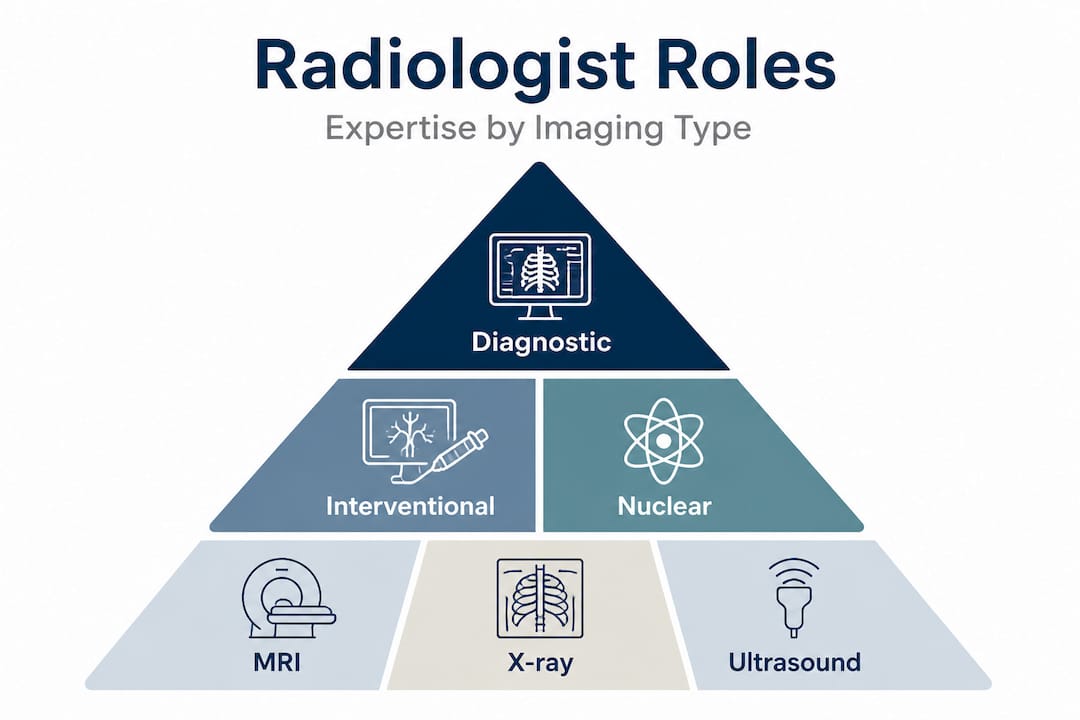
Interventional radiologists take a more active role. Interventional radiology goes beyond reading images: these specialists use imaging to guide procedures to treat conditions, using tools like CT, ultrasound, MRI, or fluoroscopy to direct instruments with precision and enable smaller incisions than traditional surgery. Examples include guided biopsies, catheter-based treatments, and targeted tumour therapies.
The imaging methods used across both specialties include a wide range of technologies:
- X-ray: The most widely used imaging method. Produces images of bones and dense tissues quickly and with low radiation exposure.
- Ultrasound: Uses sound waves to create real-time images of soft tissues, organs, and blood flow. No radiation involved.
- CT scan (computed tomography): Combines multiple X-ray images to produce cross-sectional views of the body, useful for complex diagnoses.
- MRI (magnetic resonance imaging): Uses magnetic fields and radio waves to produce detailed images of soft tissue, the brain, and the spine.
- Mammography: A specialised X-ray of breast tissue used for cancer screening and diagnosis.
- Fluoroscopy: Real-time X-ray imaging used to observe movement within the body or guide procedures. Learn more about fluoroscopy for spinal injections, one of its most effective applications.
For a broader overview of the range of options available to patients, you can explore the types of medical imaging in more detail.
| Imaging type | Uses radiation? | Best suited for |
|---|---|---|
| X-ray | Yes | Bones, lungs, dense tissue |
| Ultrasound | No | Soft tissue, organs, pregnancy |
| CT scan | Yes | Complex internal structures |
| MRI | No | Brain, spine, soft tissue |
| Mammography | Yes | Breast tissue screening |
| Fluoroscopy | Yes | Real-time guided procedures |
It is worth noting that certain conditions, including some forms of skin cancer, may require a combination of imaging and clinical assessment. Radiologists often work alongside specialists in dermatology, oncology, and surgery to provide a complete picture of a patient’s condition.
How radiologists fit into your healthcare journey
Understanding the patient pathway in Southern Ontario helps clarify how radiologists contribute to your overall care, even if you never speak to one directly.
Here is a step-by-step look at what typically happens when your physician refers you for imaging:
- Referral is issued: Your family physician or specialist identifies a clinical question that requires imaging, such as a suspected fracture, unexplained pain, or a lump that needs investigation.
- You attend your appointment: A trained imaging technologist greets you, positions you correctly, and operates the equipment to acquire your scan.
- Images are reviewed: The technologist sends your images to the radiologist, who may be on-site or reviewing them remotely.
- The radiologist produces a report: After carefully analysing your images, the radiologist writes a formal report describing their findings, noting anything abnormal, and recommending further steps if needed.
- Your physician receives the report: Your referring clinician reviews the radiologist’s findings and uses them to confirm or adjust your treatment plan.
Patients seeking imaging in Southern Ontario should expect their scan to be acquired by imaging technologists, then interpreted by a radiologist who communicates findings via an official report to their referring clinician, and in some cases, helps guide next steps.
“A radiologist’s interpretation may identify findings that require immediate follow-up, additional imaging, or a referral to another specialist, making their report a pivotal document in your care pathway.”
Before attending your appointment, reviewing a patient guide to X-rays can help you know what to expect and reduce any anxiety about the process. It is also useful to understand that in some cases, an X-ray may detect cancer or other serious conditions, which is why the radiologist’s expertise in interpreting those images is so critically important.
Pro Tip: Always ask your referring physician whether your imaging report is complete and available before making decisions about next steps in your treatment. Incomplete or pending reports can sometimes lead to unnecessary delays in care.
The impact of AI in radiology
Artificial intelligence is now a genuine part of modern radiology workflows. AI tools can analyse imaging data at speed, flag potential abnormalities, and assist radiologists in prioritising which scans require urgent attention. In a busy clinic environment, this kind of support can meaningfully reduce turnaround times and help radiologists focus their attention where it matters most.
The benefits of AI in radiology include:
- Faster identification of time-sensitive findings such as pulmonary emboli or intracranial bleeding
- Consistent screening across large volumes of images without fatigue
- Support for radiologists in detecting subtle patterns that could be easy to overlook
- Improved workflow management in high-demand imaging environments
However, it is important to understand what AI cannot do. AI in radiology is increasingly used in radiology workflows, but major professional commentary emphasises that it is not a full replacement for radiologists because clinical judgment and responsibility are essential. An algorithm can identify a shadow on an image. It cannot weigh a patient’s full clinical history, interpret ambiguous findings, or take responsibility for a diagnostic decision.
“Replacing radiologists with AI does not remove risk from the diagnostic process. It moves that risk directly to patients, who would be left without the clinical judgment and accountability that only a qualified physician can provide.”
This point matters for patients in Southern Ontario. When you receive your imaging report, a licenced radiologist has reviewed your images, applied medical training and clinical experience, and stood behind the findings with professional accountability. That is something no algorithm can replicate.
Advancements like digital X-ray technology and the advantages of digital radiography have already transformed how quickly images are produced and reviewed. AI is the next layer of support in that evolution, not a replacement for the physicians who interpret the results.
For conditions where imaging interacts with other specialties, such as advanced melanoma detection, the combination of trained radiologists and modern technology produces the most reliable outcomes.
Why patients rarely meet their radiologists — and why their work matters
There is an interesting paradox at the centre of diagnostic imaging: the professional who has arguably the greatest influence on your diagnosis is the one you are least likely to ever meet. Patients often remember the technologist who greeted them, positioned them, and explained the procedure. They rarely think about the radiologist who spent careful, concentrated time studying their images and writing the report that shaped what happened next.
This invisibility can create a false sense that radiologists are a minor or administrative part of the process. In reality, they are often the reason a serious condition is caught early, a treatment plan is adjusted, or a potentially unnecessary intervention is avoided. Consider this: a radiologist who notices a subtle finding on a chest X-ray may be the first person in the entire healthcare system to identify a developing condition, even before a patient has experienced any symptoms.
At Valence Medical Imaging, we understand how central this expertise is. Our clinics across Southern Ontario are built to support both patients and referring physicians with fast turnaround on reports, quality imaging equipment, and a system designed to get accurate results back into your doctor’s hands without delay. We have seen firsthand how cancer detection in radiology depends on the quality of both the imaging and the interpretation.
The takeaway for patients is simple: your radiologist may be behind the scenes, but their findings directly shape your care. Ask about your report. Understand its contents. And trust that the professional who analysed your images takes that responsibility seriously.
Pro Tip: When you receive your imaging results, ask your doctor to walk you through the radiologist’s specific findings. The details in that report, including what was seen, what was ruled out, and what requires follow-up, are your clearest window into your health status.
Connect with expert imaging services in Southern Ontario
Valence Medical Imaging has served patients across Southern Ontario for over 35 years, with seven clinic locations in Toronto, Scarborough, Brampton, Bramalea, Niagara Falls, and Whitby. Whether you need an ultrasound, digital X-ray, mammography, bone density imaging, or fluoroscopy, our team is here to ensure your experience is smooth, efficient, and comfortable. We offer same-day availability for select services and fast report turnaround so your physician has what they need without unnecessary delays. To take the next step, book your imaging appointment online today. If you have been referred for a procedure involving imaging guidance, you can also learn more about our fluoroscopy clinic and the services available near you.
Frequently asked questions
How is a radiologist different from a radiologic technologist?
Radiologists are doctors who interpret images and guide diagnosis, while technologists operate imaging equipment and acquire the scans. Both are essential, but their training and responsibilities are entirely separate.
Can radiologists diagnose cancer from an X-ray?
Radiologists can identify suspicious findings on X-rays, but a definitive diagnosis often requires further imaging, laboratory tests, or a biopsy to confirm. Their report guides the next steps your physician takes.
Does AI replace radiologists in image reading?
AI supports radiologists by analysing images and flagging potential findings, but clinical judgment and professional responsibility cannot be fully replaced by automated systems. Radiologists remain accountable for every report.
Will I ever meet my radiologist in person?
Most patients do not meet their radiologist, as they focus on interpreting images and producing reports for your physician. Interventional radiologists are the exception, as they may consult with you directly before performing a guided procedure.
What kinds of procedures do interventional radiologists perform?
Interventional radiologists use imaging to guide minimally invasive treatments such as biopsies, fluid drainages, catheter placements, and targeted tumour procedures, often with smaller incisions than conventional surgery requires.
Recommended
- Are X-Rays Safe? Understanding Radiation Exposure in Modern Imaging – Valence Medical Imaging
- Book Appointment – Valence Medical Imaging
- Do I Need a Referral for an X-Ray? Understanding Imaging Requirements – Valence Medical Imaging
- Can I Eat or Drink Before an X-Ray? – Dietary Guidelines for Imaging Procedures – Valence Medical Imaging